

Investing Truth No. 7: Diversification works... until it doesn't
By Mike Jones, posted May 15th, 2014
Most people think of investing as a personal activity that directly impacts their individual future. However, most of what we are taught is really only applicable to investors en masse, i.e. the market-at-large, and over large periods of time. Over the next several months I will share 10 points that I believe every investor should know prior to committing funds to any investment program.
I use the Risk/Reward Continuum (pictured below) when discussing or explaining investments and the need for diversification with clients. It gives a great visual for demonstrating how to spread out risk as well where certain asset classes fall along the continuum.
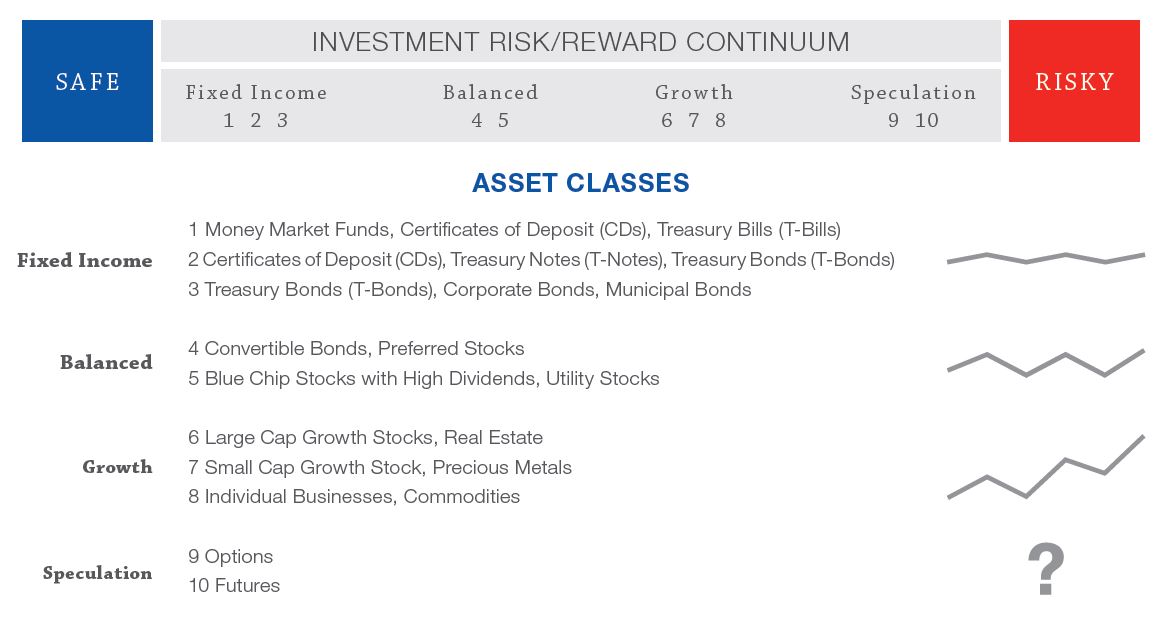
In an ordered, "text book perfect" world, once an investor determines a set of basic information (like time horizon, risk tolerance, and goals for a particular sum of money) investing would become easy. Simply do the math and allocate funds. In fact, one prominent mutual fund company writes:
The goal of asset allocation is to combine investments with different characteristics so that the risks inherent in any one investment can be balanced by assets that move in different cycles or respond to different market factors. And because leadership tends to rotate from one segment of the market to another, asset allocation can also help you gain exposure to market leaders. You won't have to guess which asset class is going to do well each year if you already have exposure to many different segments of the market.*
And a very famous research piece published in 1986 by researchers Gary Brinson, Randolph Hood, and Gilbert Beebower attributed 93.6% of the expected investment return to asset allocation.** This would lead one to conclude that virtually all of the heavy lifting done when managing a portfolio begins and ends with asset allocation. So how import really is that other 6.4%? I say, "VERY!!"
While most investors believe the most important rule for managing risk is diversifying a portfolio with proper asset allocation, history shows that most asset classes move in the same direction during a financial meltdown (see following charts).
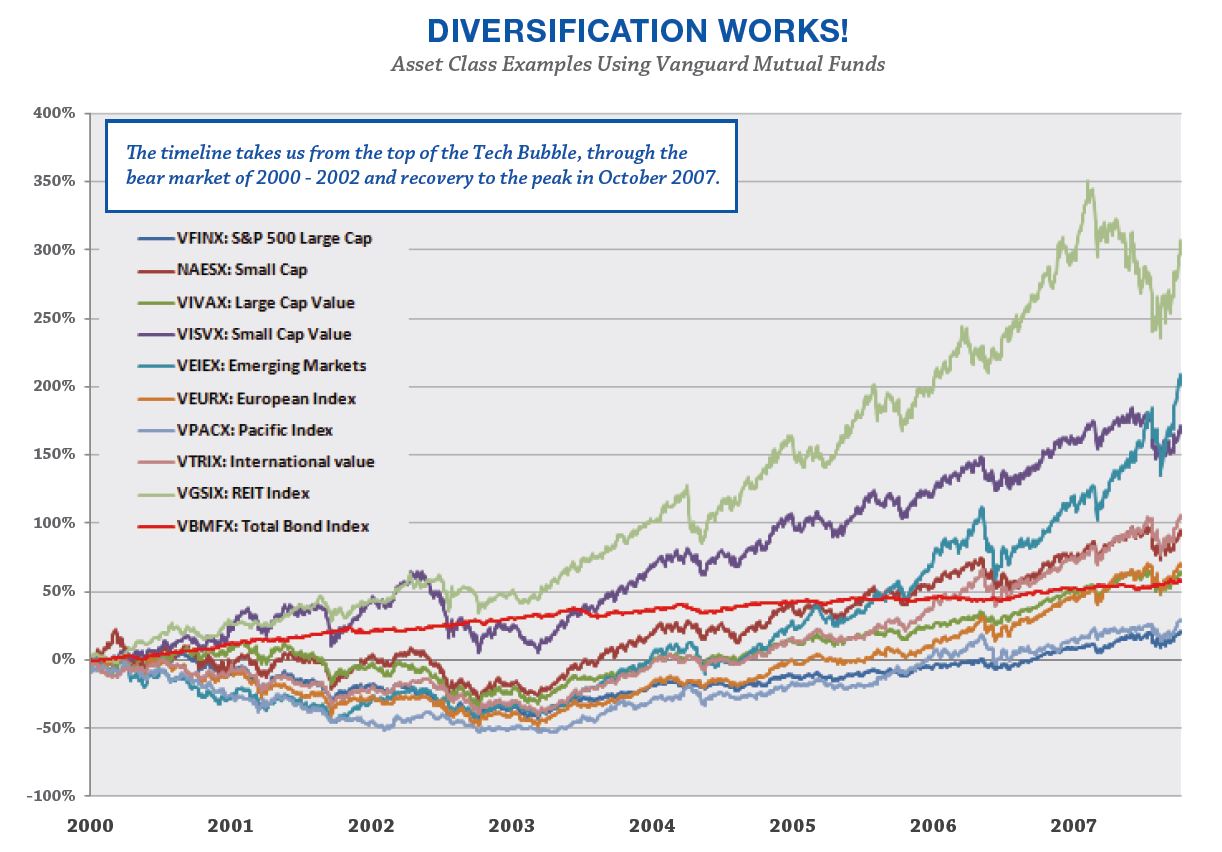
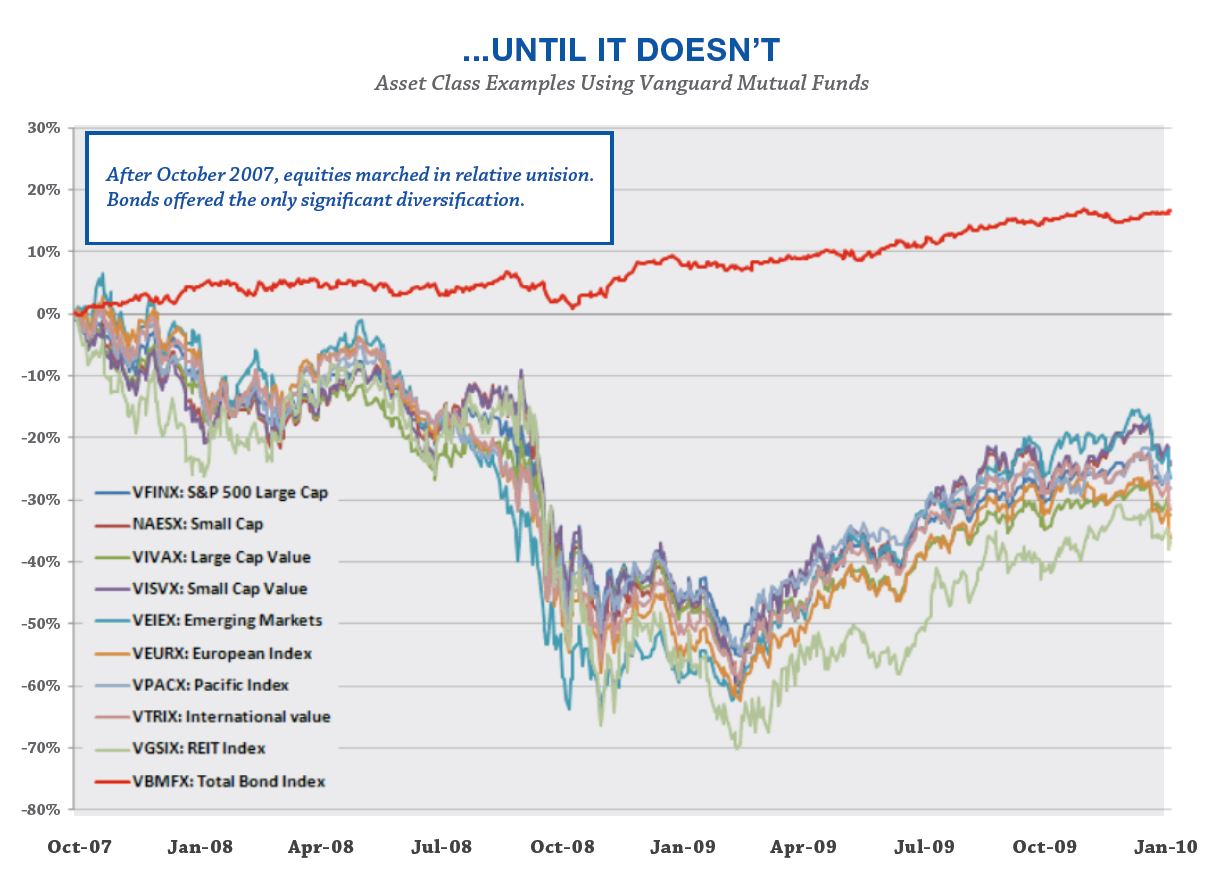
As you can see from most recent financial crisis, diversification did little to protect investors from the downward movement in prices. So what can we learn from this knowledge? Asset allocation works the least when you as an investor need it the most.
Please don't accept at face value a simple, one-size-fits-all explanation from the financial industry to solve for your family's financial future. Learn how to diversify your assets in multiple ways, not simply across multiple assets.
*Source John Hancock Investments
**Source Advisorperspectives.com
Chart source: dsort.com
Mike Jones is Managing Director / Investing Group of Argent Advisors, Inc. Email him at mjones@argentadvisors.com. Write to him at 500 East Reynolds Drive, Ruston, LA 71270 or call him at (318) 251-5844. The opinions of any single advisor do not necessarily reflect the opinions of Argent Advisors, Inc. No forecasts can be guaranteed. Argent Advisors, Inc. does not offer tax, insurance or legal advice. The information contained in this column should not be construed as a substitute for personalized investment, tax, insurance or legal advice.
Have you met our team?
We have a wealth of experience
in the financial services industry.
